
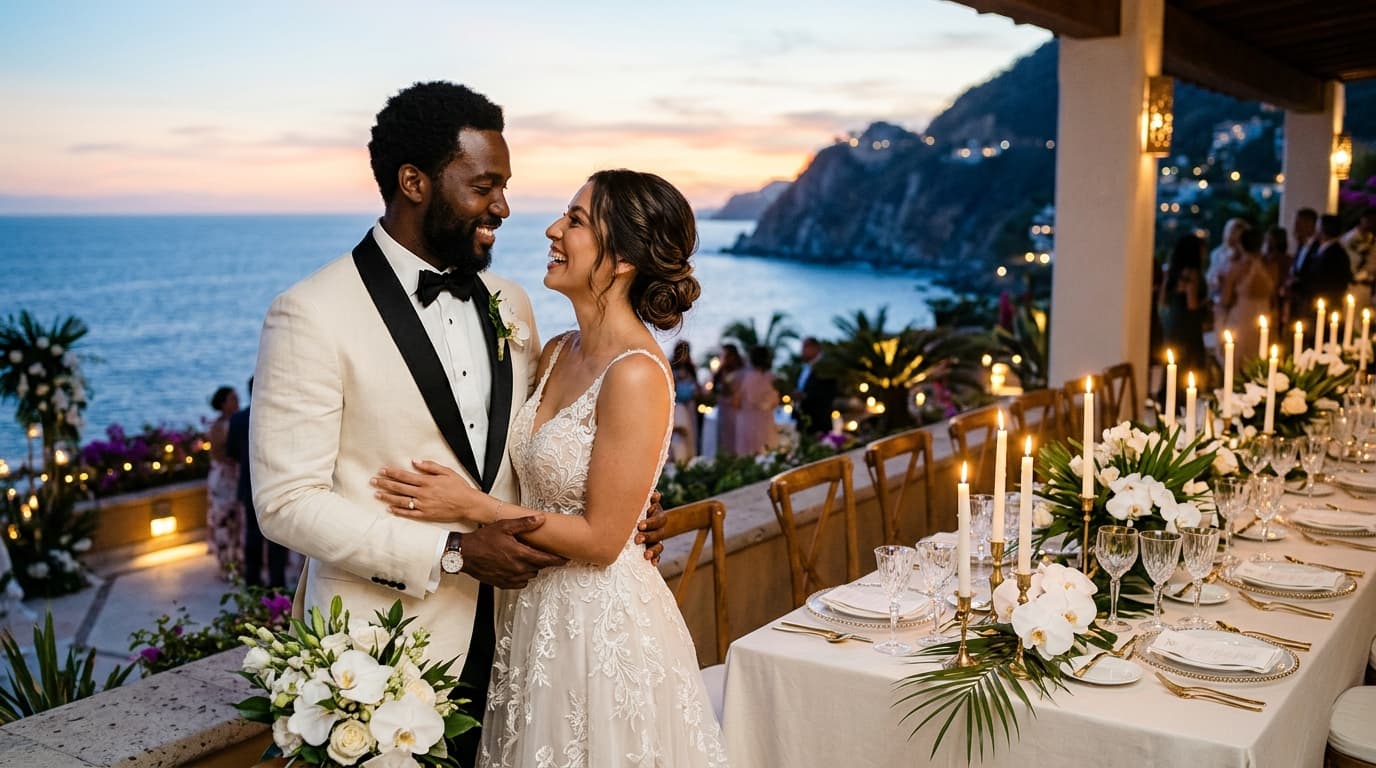
Hosting a luxury destination wedding at a private estate in Puerto Vallarta offers an unmatched level of intimacy, architectural drama, and residential grandeur. Top-tier venues nestled in exclusive enclaves like Conchas Chinas, Amapas, and Sierra del Mar present sweeping vistas of Banderas Bay framed by lush jungle flora. However, translating a high-end multi-course menu concept into flawless execution within a private residential setting requires sophisticated culinary logistics. Unlike commercial resort ballrooms built with back-of-house service corridors and heavy-duty kitchens, private luxury villas require meticulous temporary infrastructure planning to support Michelin-caliber dining operations.
Transforming Residential Estates into High-Capacity Culinary Venues
While executive villa kitchens in the South Shore of Puerto Vallarta are often visually stunning with granite islands and luxury domestic appliances, they are fundamentally designed for residential use. A multi-course plated dinner for 80 to 150 guests demands commercial-grade output, precise temperature control, and synchronized plating assembly that far exceeds the thermal and spatial limits of household ovens and ranges.
To achieve seamless service without disrupting the estate’s aesthetic harmony, luxury event strategists construct a dedicated, fully equipped temporary field kitchen. This auxiliary culinary zone is typically established in a discreet, paved area—such as a covered service garage, lower-level motor court, or a tucked-away staff courtyard out of guest sightlines.
Designing Efficient Dual-Zone Field Kitchens
Executing a flawless multi-course menu requires dividing the temporary culinary footprint into clear, operational zones. Workflows must flow logically from raw ingredient prep to final plating and pass-through service.
- Hot Line & Thermal Prep Zone: Equipped with portable propane-powered convection ovens, heavy-duty gas burners, deep fryers, and thermal holding cabinets (Hot Boxes) to maintain protein temperatures without drying out delicate cuts.
- Garde Manger & Cold Prep Area: Stainless steel worktables dedicated to cold appetizers, salads, and intricate amuse-bouches, supported by mobile commercial refrigeration units.
- Plating & Assembly Pass: A long, illuminated stainless steel staging line equipped with heat lamps where executive chefs conduct final quality control, micro-green garnishing, and sauce drizzles before servers convey dishes to table.
- Scullery & Sanitation Station: A segregated, fully plumbed dishwashing station featuring three-compartment sink systems, greywater collection containers, and eco-friendly waste management setups to ensure strict hygiene standards throughout the night.
Managing Coastal Microclimates and Cold-Chain Logistics
Puerto Vallarta’s tropical climate introduces specific environmental variables that affect ingredient integrity and food safety. Ambient humidity and afternoon heat along the coast require rigorous cold-chain management from the vendor’s central commissary to the final service moment on the villa terrace.
High-end catering teams utilize temperature-controlled refrigerated transport vans to transport fresh Pacific seafood—such as red snapper, totoaba, and octopus sourced directly from local fisherman co-ops in Cruz de Huanacaxtle—as well as imported prime meats and artisanal cheeses. Once on site, raw ingredients must move immediately into portable commercial reach-in chillers running on dedicated secondary circuits, preventing premature exposure to humid ocean air.
Additionally, delicate culinary elements like pulled-sugar garnishes, chocolate tuiles, and ice cream courses demand precise microclimate mitigation. Pastry chefs often require a climate-controlled interior villa room retrofitted as a temporary cold room (maintained at 18°C / 64°F) to assemble intricate desserts just moments prior to table delivery.
Navigating Vertical Terrain and Terrace Elevational Challenges
The dramatic cliffside topography of Puerto Vallarta’s Upper Conchas Chinas and Mismaloya offers breathtaking coastal panoramas, but it also creates physical elevation challenges between the lower service entry and upper dining terraces. Transporting hundreds of hot, multi-component dinner plates up multi-tiered outdoor staircases demands refined service architecture.
Tiered Service Logistics & Runner Routes
To prevent food cooling during transit across multi-level residential layouts, culinary teams establish intermediate staging satellite stations. Covered insulated tray carts are used by designated back-of-house runners to move plates quickly from the ground-level field kitchen to a hidden service butler pantry adjacent to the main dining terrace. Front-of-house waitstaff then take over, executing synchronized table drops with smooth precision.
Cobblestone Navigation and Transport Equipment
Many private estate access roads in historic neighborhoods feature narrow, steep cobblestone inclines. Catering vehicles must be precisely sized to navigate tight switchbacks without scraping undercarriages. Heavy kitchen equipment, stainless steel tables, and loaded hot boxes must be outfitted with pneumatic rubber casters rather than hard plastic wheels to glide smoothly over uneven Saltillo tiles and natural stone pavers without creating noise or jarring delicate plated elements.
Municipal Compliance, Fire Safety, and Environmental Protocols
Operating open-flame commercial cooking equipment within private residential areas requires strict adherence to safety protocols and local environmental standards set by the municipality of Puerto Vallarta. Professional villa event management integrates comprehensive safety measures directly into the operational layout:
- Propane Line Safety: Gas lines for temporary ranges must utilize braided stainless steel hoses, dual-stage pressure regulators, and automatic shut-off valves inspected by certified technicians.
- Fire Suppression Infrastructure: Portable Class K fire extinguishers (specifically designed for high-temperature cooking oils) alongside ABC dry-chemical units must be stationed at both ends of the temporary hot line.
- Grease and Waste Containment: Heavy grease traps and sealed grease disposal containers are installed to prevent any runoff into municipal storm drains or surrounding soil, protecting the delicate local coastal ecosystem.
- Potable Water Infrastructure: Commercial catering requires high-grade potable water for food prep and sanitation. High-capacity, food-grade water bladders with inline filtration pumps ensure a constant supply of pressurized fresh water independently of the home's internal plumbing capacity.
Creating Unforgettable Oceanfront Dining Experiences
By engineering a robust, invisible back-of-house culinary operation, couples can offer their guests a dining experience that rivals the finest Michelin-starred establishments in Mexico City or New York—all set against the romantic backdrop of the Pacific Ocean sunset. From impeccably seared local catch to beautifully paired courses presented on custom pottery, masterful temporary kitchen logistics turn a private luxury villa into an extraordinary epicurean destination.